You Don’t Have a Lead Problem
Open your CRM and count everyone who came in over the last ninety days. Fifty. Maybe two hundred. Now count how many of those people you have actually had a conversation with.
Those two numbers are almost never close. The distance between them is the business.
The belief running underneath most slow quarters is that the pipeline is thin. Things feel quiet, the phone is quiet, and the conclusion arrives on its own: I need more leads. There is an entire economy built to agree with you — portals, lead services, ad platforms, all of them ready to sell you the diagnosis you have already accepted.
Sometimes it is the right one. If your database holds eleven names, you do have a lead problem, and you should go get leads.
But most agents are not working with eleven names. They are working with hundreds. What they have is follow-up that stopped in week two.
A lead is not a client, an appointment, or a closing. It is a person who raised a hand — clicked a listing, asked about a house, requested a valuation, signed an open house sheet. That is the entire definition. By that standard, most agents already have plenty.
Here is the timeline they are landing in. The median buyer spends ten weeks searching, and that clock starts after they have already decided to look. NAR has recorded the same ten weeks every year since 2022. So the person who filled out your form on Tuesday is, at the median, two and a half months of active searching away from owning something — and the months of thinking that came before the search are not in that number at all.
Now hold that against how long most follow-up actually lasts. Three calls. Maybe a text. Two weeks, and then the record goes cold and quietly becomes evidence that the lead was bad.
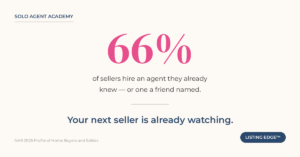
I saw this most clearly coaching loan officers in Anchorage. Same consumer, same day, reaching out to a lender and an agent. Ninety days later the loan officer was almost always the one still top of mind — not because they cared more, but because their system assumed the decision would take months. Agents tend to make a few attempts and stop. Not out of indifference. Out of not knowing what the next conversation is supposed to be.
That is the actual gap. Not effort. Not caring. Not knowing where the person is standing.
Which is what the Decision Gap Loop™ is for — Awareness, Desire, Hesitation, Rationalization, Re-Engagement, Commitment. A lead record cannot tell you which of those someone is in. Only a conversation can. Source tags tell you where a person came from. They have never once told you what to say next.
So before the next lead purchase, run the audit. Ninety days, two numbers: leads added, conversations had.
Then take twenty people you never actually spoke with and call them — not to ask whether they are ready, but to find out what stalled. That second question does the work the first one never could.
Then change what your CRM is organized around. Keep the source tags; they are useful for spending decisions. Add a stage. When a record reads Hesitation instead of Website Registration, the next step stops being a guess.
Search timeline: National Association of REALTORS®, 2025 Profile of Home Buyers and Sellers.
One Next Step
The Decision Gap Loop™ maps all six stages and the conversation that belongs to each one — so you always know what comes next instead of guessing.
See the Decision Gap Loop™